
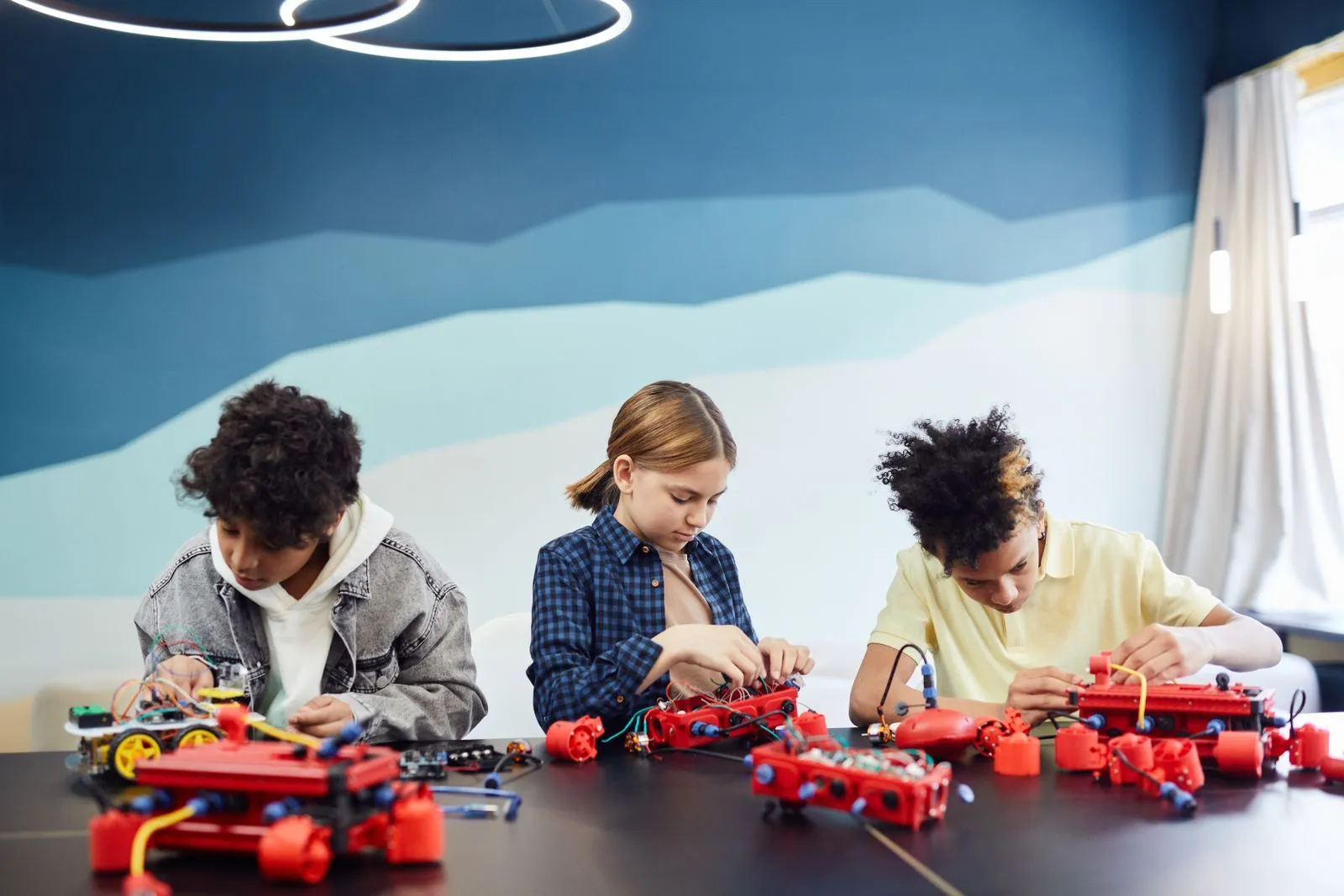
A robot project gives kids more than a finished machine to show off. It gives them a practical way to explore how instructions, parts, and ideas work together. While building and programming, they can see what happens when a design succeeds—and what needs changing when it does not. These hands-on experiences introduce core skills in coding, engineering, problem-solving, and testing, helping children connect classroom concepts with something they can make and control.
Coding Becomes Something They Can See
A robot responds to instructions, so kids can observe the effect of their code right away. They might program it to move forward, turn, stop at a line, or react to a sensor. If the robot turns too early, they can revisit the sequence or adjust a setting. This immediate feedback makes abstract ideas such as commands, order, and cause and effect easier to understand.
As projects grow, children can practice breaking a task into smaller steps. They may use loops to repeat an action or conditionals to tell a robot what to do when it detects an obstacle. These building blocks help kids develop a clear, organized approach to giving instructions—skills they can apply to new programming challenges.
Engineering Starts with Design Choices
Building a robot introduces children to the relationship between a design and its performance. They choose where to place wheels, how to attach components, and how to keep a structure balanced. A robot that tips over or struggles to move invites practical questions: Is its weight distributed well? Are the wheels aligned? Does the frame need more support?
Kids also learn that a design is a set of decisions, not just a drawing. Materials, size, and construction all affect what a robot can do. Testing different arrangements helps children connect planning with real results and encourages them to explain why they chose a particular solution.
Problems Become Solvable Steps
When a robot does not behave as expected, kids have a concrete problem to investigate. They can check one part at a time: the code, a loose connection, a blocked wheel, or a sensor's position. This process encourages careful observation instead of random changes. Children learn to describe what happened, compare it with what they expected, and choose a useful next step.
Projects often require more than one reasonable solution. A robot could navigate a path using different designs or instructions, and each approach may have trade-offs. Discussing options helps kids practice flexible thinking, make decisions based on the task, and learn that setbacks can provide information for the next attempt.
Testing Makes Improvement Visible
Testing gives children a way to find out whether their robot meets its goal. They can run it through the same task, watch where it succeeds or struggles, and note what changed after an adjustment. Repeating a test under similar conditions makes it easier to tell whether a change helped, rather than relying on a guess.
A useful cycle is simple: build, run the robot, observe the result, and revise one part at a time. Kids see that improving a project is normal engineering work, not a sign that they failed. Over time, they can explain their choices and use evidence from their tests to decide what to try next.
Building robots gives kids a practical setting to connect code, design, and careful testing. Let your child start with a manageable goal, such as making a robot follow a short path, then encourage them to describe what worked and what they would change. Baltimore Code Lab offers hands-on coding and robotics activities for young learners.